Six ways that we save on our disney World trips in 2026
Making the trip to Walt Disney World can get expensive. We’ve been coming here together now for several years, and in that time have found a few ways to save here and there on our expenses.
These are six of our favourite ways to cut back on cost, allowing us to get the most we can for our money when heading to the magic.

(This post may contain referral links. If you sign up using our links, we may earn a small referral bonus at no additional cost to you.)
Get a tesco clubcard, and set it to auto convert your clubcard points into Virgin flying club points
This is a simple and easy one to start off. The Tesco Clubcard is one of the best ways to convert your everyday spending into savings on your trip to Florida (or anywhere else Virgin might fly).
We do all of our food shopping through Tesco (online or in store) and make sure we buy our fuel at Tesco too. Every month. That’s an easy £600 we’re spending anyway that gets automatically converted and added to our Virgin Flying Club balance.
Now I will say that Virgin’s rewards system is not as good as it used to be. Points don’t offer the same value they used to, but when it comes to everyday spending, we might as well get what we can in value for money.
If you are not a Virgin Flying Club member, it’s free to sign up, and you accumulate points for each flight you take with the airline. You only accumulate points for your personal flights, so both Han and I have our own individual accounts. We didn’t realise this the first time we flew together, so just a heads up to make sure you’re not missing out on half of your points.
2. Capital on tap business credit card (It’s free)
Since last summer, we’ve been using the Capital On Tap credit card for all of our expenses. It’s a card for registered small businesses that offers some nice benefits. For us, that’s mainly:
1% cashback on everything we spend
No foreign exchange fees at the time of writing (always check current terms).
Redeeming points for Virgin Flying Club Points
Redeeming points for cash
The 1% cashback is really good. By the time we’ve paid for our flights, rental car, villas, and hotels, that’s a lot of money we’re earning back on that we weren’t earning in previous years. You can withdraw that 1% as cash directly into your bank if you want to.
We pay for our expenses using the card, and when our YouTube revenue comes in each month, we clear it down to zero to avoid paying any interest. That way, we’re getting cash or Virgin points back for everything we spend.
We also buy our groceries and fuel using the card. So that means we’re getting the clubcard points and doubling up because we can also convert the cashback from the Capital card into more Virgin points. Pretty good!
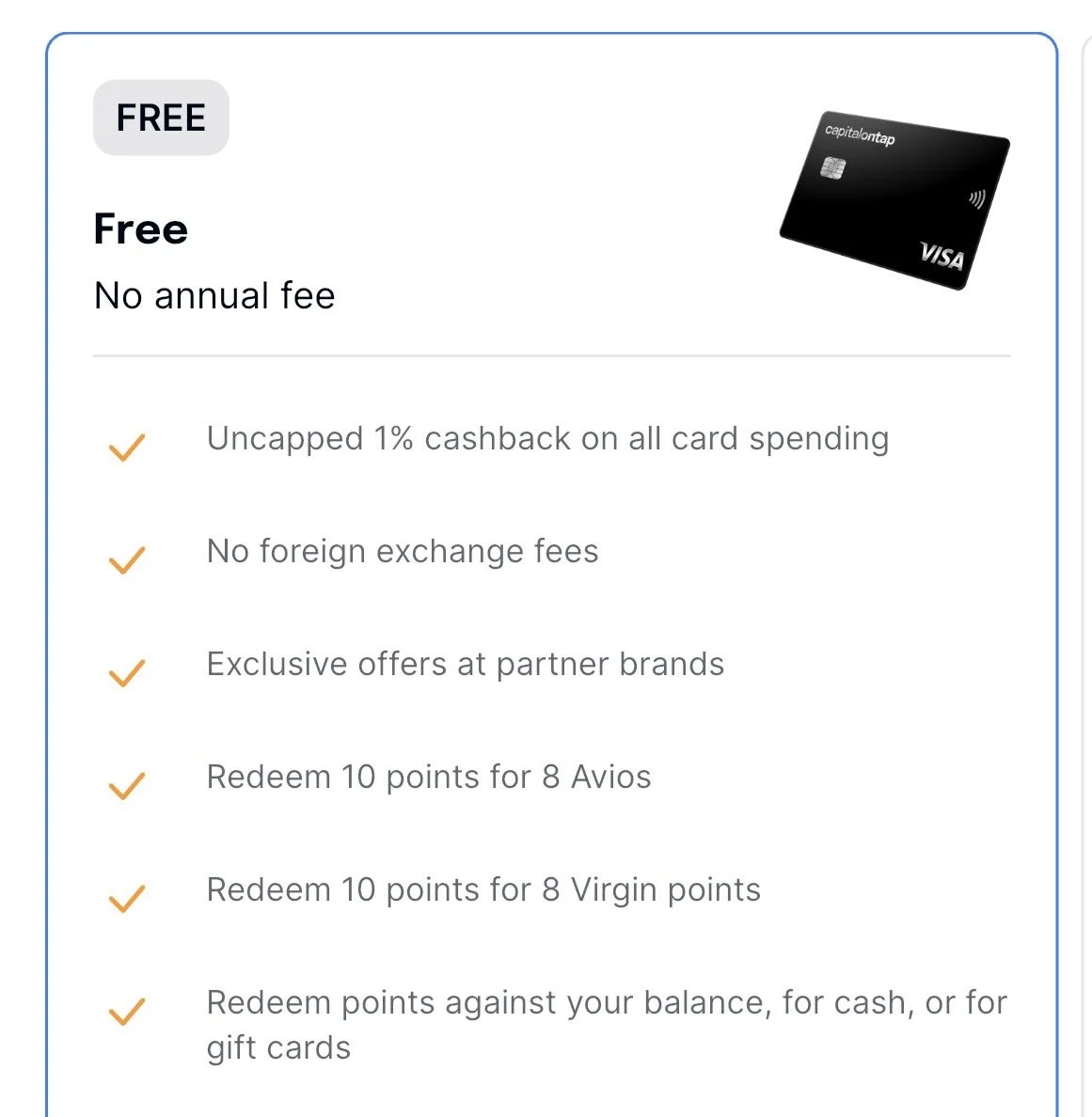
The free version of the card offers 8 Virgin Points for every 10 points earned, while the paid version (£299 per year), offers a 1:1 exchange. We don’t use the paid version because we’re not particularly worried about airport lounge access, but it does offer some decent rewards that are worth looking into.
This article reflects our personal experience and is not financial advice. Always research financial products carefully before applying.
If you own a small business and believe this card may be a good fit for you, you can use our referral link here.
Han & Alex Capital On Tap Referral Link
Disclaimer: Capital On Tap offers a 7500 point sign-up bonus for both parties if you sign up through a referral link. It supports our business, while also meaning £75 you can utilise as cash in your pocket, which is also redeemable as gift cards or air miles.
If you are looking for a personal card, we used to use Monzo before we switched to Capital On Tap. Monzo offered zero foreign exchange fees, and I love the app. Revolut is also good, but it has small exchange fees, and I don’t think the app is quite as good.
3. Car rental savings
Not everybody rents a car, and if you don’t, I guess that’s a pretty good saving in itself! If you’re staying on property and don’t plan on venturing out too much, you can enjoy your trip comfortably without a rented car. Disney has transport options that will take you anywhere on property for free, and if you do want to go to a shopping outlet or a restaurant offsite, Uber and Lyft will pick you up from your hotel/Disney Springs, etc.
But for those who stay offsite or rent a car in Florida. Here’s how we saved on our current trip in March/April of 2026.
I switched to using Turo, which is a private car rental service rather than a rental company.
It means you’re renting a car from a private owner rather than a company like Alamo, and it actually proved to be a much better deal.
For starters, you have complete control over the car you’re driving. Which, for me, as somebody who loves driving in the US and spends quite a lot of time doing it, is a real plus.
Whereas on our previous trip, we arrived at the Alamo check-in a little late after a delayed flight, and the selection of cars available was exactly one, about 20 years old, and I didn’t want it. I ended up taking a downgrade in the size of the car just to get something better, which Alamo considered a ‘voluntary downgrade’. Didn’t love that.
With Turo, you hand-select the car you want. I know what I’m getting before I leave home on travel day, which I love.
All cars and their owners are rated, just like they are on Airbnb. The app is super easy to use and pretty intuitive. For example, when you arrive at the car, it’s locked with a lock box, and you have to take photos of the car and a picture with your license before you can unlock it.

But the main reason for the decision was the pretty remarkable cost saving. Turo offers discounts for the length of your stay, and because we were renting for 31 days, we saved 45% on our overall fee.
For a Midsize SUV, Alamo wanted over £1,200, and I just checked it for May 1st to May 31st, and it’s coming out at over $1,500, converted to £1,170.
I paid $986 on Turo (£745), for a much better car (VW Tiguan 7 seater), and a car that I chose.
One note, they do have mileage limits. So if you were planning a lot of road trips, it wouldn’t necessarily work for you. But 60 miles per day is a lot. Our villa is 8 miles from Disney. So was just fine for us!
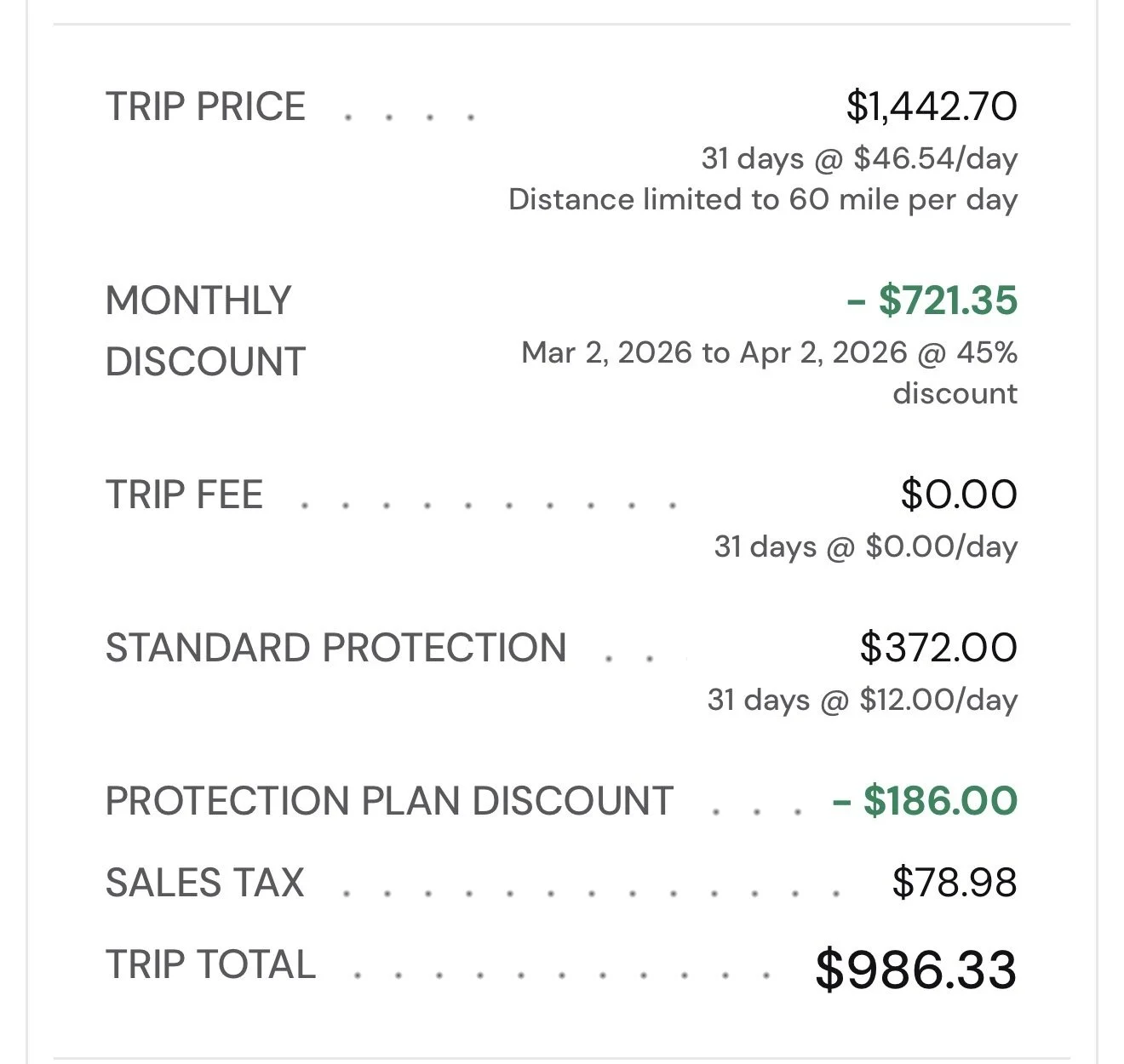
It just seems like an infinitely better deal. That fee includes a protection plan of your choosing, which you absolutely must do to limit your exposure. You choose the excess you’d pay, etc.
So far, I am thrilled with Turo, and when we return the car, I will write up a dedicated post about the experience, because I think it’s one of the best ways you can currently save on travel costs.
Our travel day is now live on the YouTube channel, where we picked up the car and talked a little more about it when we arrived in Florida.
4. Dates of travel
We recently did the DVC tour, something we really didn’t understand properly until we spent the time to learn about it. It’s not for us right now, but the host did provide alot of extremely insightful information.
DVC owners get almost twice the value for their money during quiet seasons at Disney. Those are September and January primarily, followed by February and August.
Hotel bookings are typically cheaper during those months, and they’re also the best months to check for deals on sites like Dave’s DVC Rental Store, etc.
Of course, if you have restrictions like the school holidays, that’s totally understandable, but the quiet periods at Disney World are certainly worth keeping in mind if you’re able to be flexible.
Our favourite time to visit as a couple is during the spring, late March to April, or after the school holidays come to an end in September/October.
5. Travel Agent rates
I have held my travel agent license now for over two years, and it’s been phenomenal for us. We have used it to book Wilderness Lodge, Yacht Club, Coronado Springs, and both Pop Century and All-Star Movies.
We’ve also used it for hotels in London, the Radisson Red at Heathrow, a hotel stay in Mallorca, as well as booking my parents’ trip to Dubai, and a cruise for my grandparents.
All of that is commissionable, including our own travel.
The initial sign-up costs for the first year were just shy of £500. There’s an initial one-time sign-up fee, which was £150 for me, and a monthly running cost of £20. We were able to offset that cost, and now run our travel license for £240 per year while saving significantly more than that by utilizing its benefits.
For example, we booked four nights at Disney’s All-Star Movies for £596 using the license. At the time, that same booking was £700 on Disney’s website directly. Not only did we save over £100 out of the gate, but the booking is also on a 15% commission return after our stay, meaning I get a cut of our cost back in the following weeks.

Having been a part of it for a couple of years now, I think it’s a little misunderstood. Yes, the system tends to operate on a sign-up bonus type structure, and cold DM’s and pushy sales tactics can be off-putting. But having tried and tested it, there are a lot of genuine benefits to owning one for your own personal benefit, while also not needing to get involved with sales.
You have to weigh up the benefits of having an active license and its cost versus how much you’re getting out of it in return. It works for us, travelling at least 2-3 times per year, while also having a network we book travel for, including Disney trips.
I wouldn’t really recommend it to anybody who tends to do one yearly holiday, and doesn’t necessarily want to put time into networking and booking travel for others.
That said, if you do believe it could benefit you, and you’d like to know more about it, message me on Instagram here @AlexOnLife93. I’d be happy to answer any questions.
6. Saily - eSims
There are a lot of great eSims now available, which make the process of using your phone abroad a lot easier than it used to be. Han and I used to use the Three mobile travel sims, which were £10 a pop. We’d buy two each and insert them into our phones when we got to the airport.
The only problem with those was that they replaced your mobile number, and you don’t realise how often you need it until it’s not in your phone. For example, any time you got a ‘we sent a code to your mobile’, you wouldn’t be able to get it, which often blocked us from ordering on Amazon and things like that.
ESims operate alongside your phone number. It’s still active, you just switch off your data roaming to avoid the fees. The ESim then connects you to local networks as if you were a resident, making the entire process incredibly smooth.
Now that we’re signed up with Saily, I’m reluctant to change it because it’s already set up on my phone. All I need to do is top up my account before I leave the UK, and switch over my primary data provider while I’m in the air. I love it.
I do need to get around to trying other options like Holafly, so that I can compare. But in the meantime, Saily has been superb.
They too offer a referral discount, so if you need an eSim, you can use our code ALEXFI6668, and we’ll both get $5 off. The link to sign up for Saily is here.
Final note
I hope some of the information here is useful. Sometimes we worry that these tips might seem obvious, but every year there are people planning their very first Disney trip.
If you do ever find yourself getting overwhelmed, please reach out, and we’d be happy to help. We always want folks to get the very most out of traveling to Disney, and if we can support that in any way, we will do!
H&A x
Tools We Use When Travelling
• Capital On Tap credit card
• Tesco Clubcard → Virgin Points
• Saily eSIM
• Turo car rental
Frequently Asked Questions
How can you save money on a Disney World trip?
Using travel points, flexible travel dates, and loyalty programmes can reduce costs significantly.
Are travel credit cards worth it for Disney trips?
They can be helpful if used responsibly and paid off in full each month.
